What $500B OpenAI vs $200B xAI Means for NZ Startups

What $500B OpenAI vs $200B xAI Means for NZ Startups
The AI landscape just shifted dramatically. OpenAI raised $110 billion at an $840 billion valuation, while xAI closed a $20 billion Series E at a $230 billion valuation in early 2026. For NZ startup founders, these astronomical numbers aren't just Silicon Valley theatre — they signal a fundamental change in how AI creates value.
The Big Picture: Models Are Becoming Commodities
While the headlines focus on these mega-valuations, the real story is what's happening beneath the surface. Foundation model inference costs have dropped 280-fold in under two years, and prices are collapsing: Anthropic cut prices by 67%, Google slashed rates by 70%-80%.
The model is becoming a commodity. The moat is everywhere else.
This isn't abstract tech analysis — it's your strategic reality check. When any competitor can access similarly powerful foundational models via an API call, the strategic battleground shifts from the algorithm to what surrounds it.
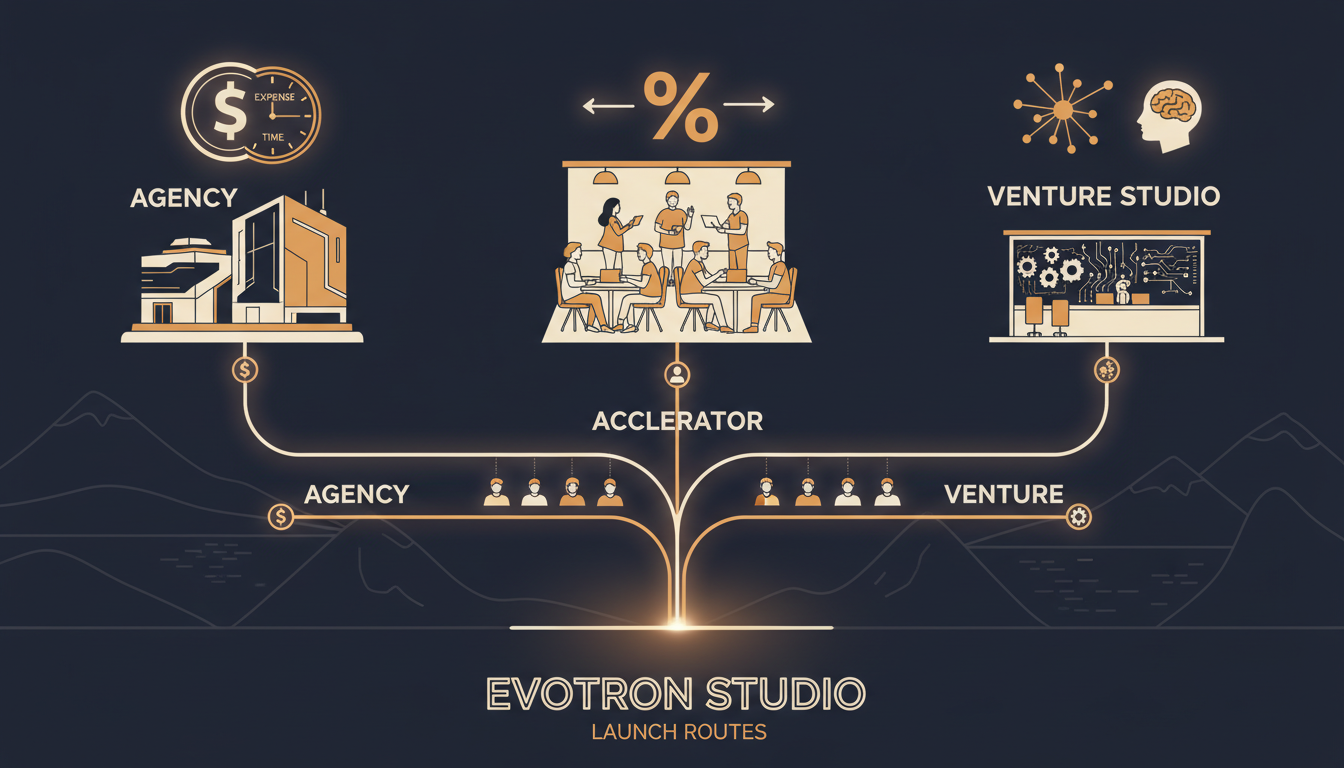
What This Means for Kiwi Founders: Two Clear Paths
Path 1: Drive AI Yourself with Purpose-Built Tools
The commoditisation creates massive opportunity for founders who want to stay lean and move fast. You don't need a $100M war chest to access frontier AI — you need the right tools and workflows.
This is where platforms like Evotron (for building) and Supramono (for selling) become your force multipliers. Instead of hiring expensive AI teams or wrestling with complex integrations, you get production-ready AI tools designed specifically for startup velocity.
Gartner forecasts AI agents will manage 40% of business applications by 2026. The question isn't whether to use AI agents — it's whether you'll drive them effectively or get left behind.
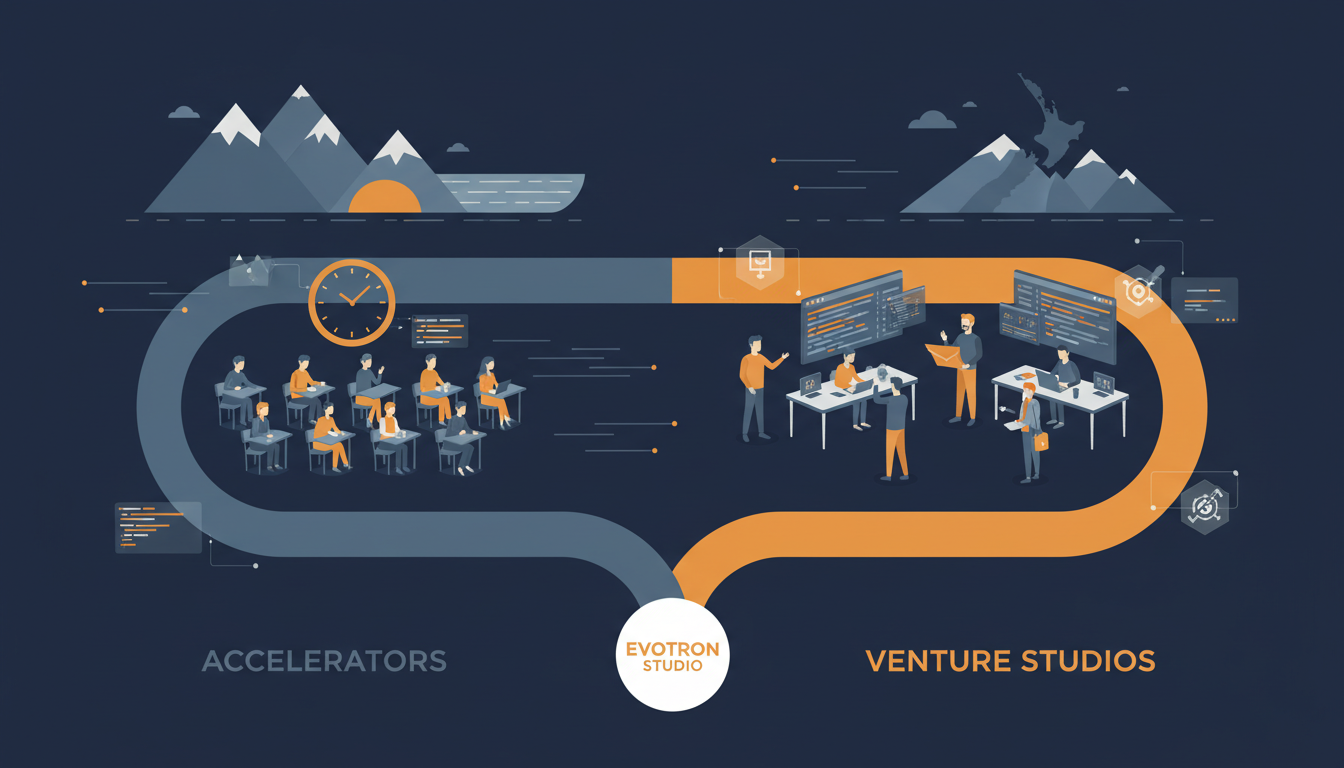
Path 2: Partner with an Agentic Venture Studio
Some founders prefer humans driving the AI agents for them. This is the venture studio model — experienced builders who combine strategic judgment with AI execution power.
AI is rewriting software economics through 'services as software' — AI that delivers outcomes rather than selling seats, targeting the services market, not just the software market.
An agentic venture studio takes this approach: human partners provide the strategic layer while AI agents handle the heavy lifting. You get startup velocity without the learning curve.
The Implementation Reality
Defensibility assessment has intensified given commoditization risk. Investors now demand answers to: Is the company a 'GPT wrapper' or does it have proprietary technology? Can the solution be replicated by OpenAI, Google, or Microsoft?
The winning play isn't having the best AI model — it's having the best AI implementation. Enterprises building durable competitive advantage share architectural investments entirely independent of model selection: proprietary evaluation pipelines and the ability to assess whether a new model improves specific workflows.
Why This Creates Opportunity in Both Directions
For AI-powered startups: AI-native companies compress $100M ARR to 1-2 years: What took SaaS companies 5-10 years now happens in 1-2 years for AI-native startups. The infrastructure is commoditised, but the application layer is wide open.
For human service providers: While sensational headlines focus on job replacement, the more nuanced reality for 2026 is human-AI collaboration. Some roles will be automated, but this displacement is historically offset by creation of entirely new jobs.
The venture studio model thrives in this environment because it combines human judgment (which AI can't replace) with AI execution speed (which humans can't match).
The NZ Advantage
New Zealand's technology landscape is entering coordinated growth, driven by government policies strengthening the ecosystem. Investors are taking notice in the early-stage space, where startups gain clearer regulatory pathways and robust guardrails for responsible innovation.
While San Francisco burns through billions, NZ founders can build lean, move fast, and focus on real customer value. If 2025 was the year AI got a vibe check, 2026 will be the year the tech gets practical — shifting from building ever-larger models toward making AI usable, deploying smaller models where they fit, and designing systems that integrate cleanly into human workflows.
Your Next Move
The $500B vs $200B headline isn't about picking winners — it's about recognising that foundation models are becoming infrastructure. The value is shifting to implementation, workflow orchestration, and domain expertise.
Whether you choose to drive AI agents yourself with purpose-built tools or partner with humans who drive them for you, the window for AI-native competitive advantage is wide open.
The question isn't which path to choose. It's how fast you'll choose one.
Ready to explore your options? Learn more about agentic venture studio partnership or discover how AI-powered tools can accelerate your startup journey.
Evotron Studio
We help founders build and sell.
We help founders build and sell.
Learn more about Evotron Studio and get started today.
Visit Evotron Studio